
What Happens Inside a Moving Truck While It’s Driving?
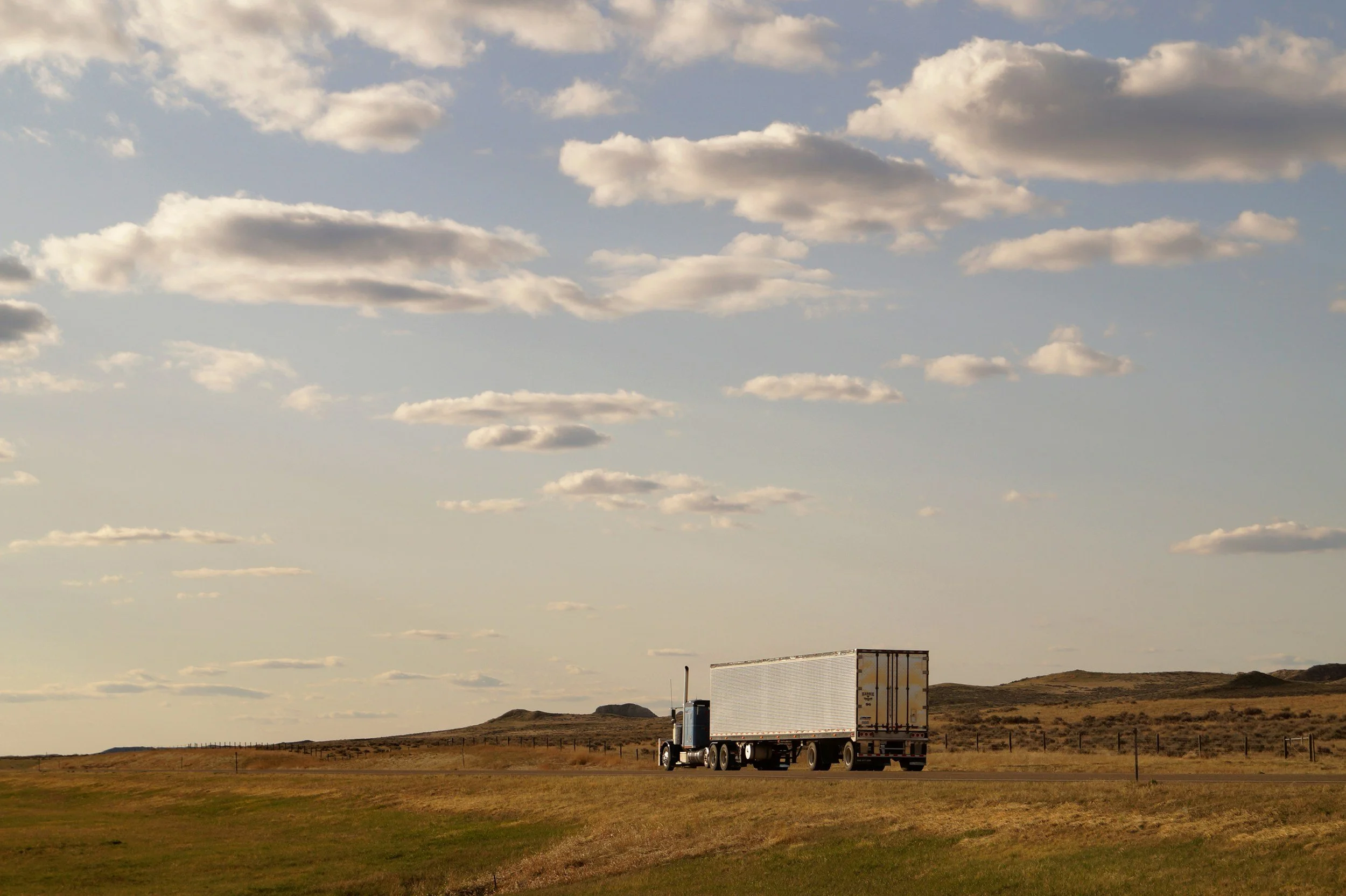
When you watch a moving truck pull away from your home, it is easy to imagine that everything inside remains exactly where the movers placed it.
Your sofa is wrapped in moving blankets. Your dining table is secured. Your mattress is positioned alongside other furniture. Dozens of cardboard boxes are stacked neatly, and your belongings are beginning their journey to your new home.
From the outside, the truck appears to be doing something simple: driving.
But inside the cargo area, something much more interesting is happening.
Every time the truck accelerates, brakes, turns, or travels over uneven pavement, the belongings inside experience forces that can affect their stability and position.
Boxes vibrate. Furniture experiences pressure from changing forces. Protective materials absorb some contact and abrasion. Securing straps resist movement. The truck's suspension responds to bumps, potholes, and changing road conditions.
Even when the cargo has been loaded correctly and nothing visibly shifts, the belongings are still experiencing the effects of transportation.
This is one reason professional movers pay so much attention to how a truck is loaded.
A moving truck is not simply a storage room on wheels. It is a constantly moving environment where weight, momentum, vibration, friction, and cargo restraint all influence what happens to your belongings.
Understanding what happens inside a moving truck while it is driving can explain why some items need special packaging, why heavy furniture must be secured, why boxes should not be overloaded, and why the loading process matters just as much as the journey itself.
It also reveals something that surprises many homeowners: furniture damage during a move does not always happen when someone is carrying an item through a doorway.
Sometimes, the conditions that lead to damage develop during transportation.
Your Belongings Are Moving Even When They Appear Stationary
Imagine sitting inside a moving vehicle.
When the driver accelerates, you may feel yourself pressed backward against the seat.
When the vehicle brakes, your body tends to continue moving forward.
When it turns, you may feel yourself shift sideways.
These sensations are caused by inertia and the forces involved in changing the vehicle's speed or direction.
Your furniture and moving boxes are subject to the same physical principles.
The difference is that household belongings do not have seat belts.
Instead, their movement must be controlled through careful loading, suitable positioning, friction, and appropriate cargo-securement equipment.
What Is Inertia?
Inertia is the tendency of an object to resist changes in its motion.
An object at rest tends to remain at rest unless acted upon by a force.
An object in motion tends to continue moving at the same velocity unless a force changes that motion.
Inside a moving truck, your belongings are traveling at approximately the same speed as the vehicle.
When the truck changes speed or direction, the cargo must also change its motion.
If an item is properly secured, restraints and contact forces help it move with the truck.
If it is not adequately secured, it may slide, tip, or collide with surrounding objects.
Why Heavy Objects Can Be Particularly Dangerous
A heavy object has more mass than a lighter object.
For the same acceleration or deceleration, changing its motion generally requires a greater force.
That means a heavy dresser, appliance, or safe can create substantial forces on its restraints and surrounding cargo.
This is why heavy items require appropriate positioning and securement rather than simply being wedged between boxes.
1. What Happens When the Moving Truck Accelerates?
The journey begins when the driver pulls away from the property.
As the truck accelerates, the cargo must accelerate with it.
Properly secured belongings remain in position relative to the truck because the floor, restraints, and surrounding support provide the necessary forces.
Unsecured belongings may move relative to the cargo area.
Furniture Can Experience Rearward Relative Movement
When the truck accelerates forward, an unsecured object may initially lag behind the vehicle's motion.
Relative to the truck, it can appear to move toward the rear.
This does not mean the object is actively traveling backward on its own.
It means the vehicle is accelerating faster than the unsecured object.
Boxes Can Shift Against One Another
If cartons are loosely stacked, acceleration may cause small changes in their positions.
Over time, repeated movement can weaken an unstable arrangement.
Why Securement Matters From the Beginning
The truck does not need to reach highway speed for cargo movement to occur.
Changes in motion begin as soon as the vehicle accelerates.
Proper loading matters even during the first few metres of the journey.
2. What Happens When the Truck Brakes?
Braking is one of the most important situations for cargo stability.
When a moving truck slows down, unsecured belongings tend to continue moving forward relative to the vehicle.
A box may slide.
A tall cabinet may begin to tip.
A heavy appliance may press against its restraints.
A poorly supported stack may lean or collapse.
The severity depends on the braking force, cargo mass, friction, positioning, and securement.
Sudden Braking Creates Greater Challenges
A gradual slowdown produces different forces from abrupt braking.
Emergency braking can place substantial demands on cargo restraints.
This is why belongings should be secured for more than ordinary, gentle driving conditions.
Heavy Furniture Can Damage Other Items
Imagine a substantial dresser positioned behind several fragile cartons.
If the dresser is not restrained and moves forward during braking, it may crush the boxes.
The problem is not simply the dresser's weight.
It is the combination of its mass, movement, and the forces generated when that movement is stopped.
The Driver Cannot Prevent Every Sudden Stop
Even a careful driver may encounter unexpected traffic, pedestrians, wildlife, or road hazards.
Safe cargo loading must account for the possibility of sudden manoeuvres.
3. What Happens When the Truck Turns a Corner?
Turning changes the direction of the vehicle's motion.
Cargo must also change direction.
If an item is inadequately restrained, it may slide or tip relative to the truck.
Tall Furniture Can Be Vulnerable
Tall cabinets, wardrobes, and appliances may have relatively high centres of gravity.
Depending on their dimensions and support, sideways forces can increase the risk of tipping.
Loose Boxes Can Shift Sideways
Cartons stacked without adequate support may lean or move during turns.
Why Side-to-Side Securement Matters
Cargo must be controlled in more than one direction.
A load that appears stable during acceleration may still be vulnerable to lateral movement.
Professional loading considers the forces created by braking, acceleration, and turning.
4. What Happens When the Truck Hits a Pothole?
Potholes introduce sudden vertical and sometimes lateral disturbances.
The truck's suspension responds to the road surface, but the cargo may still experience jolts and vibration.
Boxes Can Experience Brief Changes in Pressure
A sudden bump may alter the forces between stacked cartons.
If a stack is poorly supported, repeated jolts can contribute to movement.
Fragile Objects Can Experience Impact
An inadequately cushioned glass item may strike the inside of its box.
Even if the outer carton remains intact, the contents can be damaged.
Furniture Can Rub Against Other Objects
Vibration and small movements may cause adjacent surfaces to make repeated contact.
Without appropriate protection, this can lead to scratches or abrasion.
Why Packaging Matters
Protective packaging helps reduce the effects of impacts and vibration.
However, packaging must be appropriate for the item.
A thin layer of wrapping is not necessarily enough to protect delicate glass or electronics.
5. What Happens on a Rough Road?
A moving truck traveling over rough pavement may experience repeated vibrations and jolts.
The effects depend on the road surface, vehicle speed, suspension, cargo placement, and packaging.
Repeated Vibration Can Cause Small Movements
An object may not shift dramatically after one bump.
But repeated vibration can gradually change the position of inadequately secured belongings.
Loose Components Can Rattle
Furniture hardware, removable shelves, and unsecured parts may vibrate.
This is why loose components should be removed or secured appropriately before transportation.
Fragile Items May Be Vulnerable
Delicate objects can experience repeated contact with their packaging or surrounding items if they are not cushioned properly.
Long Journeys Can Increase Exposure
A longer trip generally means more time exposed to road vibration and vehicle movement.
However, distance alone does not determine whether damage occurs.
Packing quality, securement, road conditions, and handling are also important.
6. What Happens to Moving Boxes During Transportation?
Moving boxes are designed to contain belongings, but they are not indestructible.
During transportation, cartons may experience compression, vibration, changes in support, and contact with other objects.
Boxes at the Bottom Support Weight
When boxes are stacked, lower cartons carry the weight of the items above them.
If the load exceeds their capacity, they may deform or collapse.
Weak Boxes Can Become Weaker
Damaged, damp, or overloaded cartons may be particularly vulnerable.
Partially Filled Boxes Can Deform
A box with large empty spaces may provide insufficient support to its walls or contents.
Appropriate internal packing can help maintain its shape.
Heavy Contents Can Shift
Books, tools, and other dense belongings may move inside a box if they are not packed securely.
Why Box Quality Matters
Suitable cartons, correct packing methods, and stable stacking help reduce these risks.
7. What Happens to Furniture Wrapped in Moving Blankets?
Moving blankets are commonly used to protect furniture surfaces.
They can reduce abrasion and provide cushioning against certain contacts.
But moving blankets do not eliminate the physical forces acting on furniture.
Blankets Protect Against Rubbing
When furniture is close to other objects, padding can help prevent direct surface contact.
Blankets Provide Limited Impact Protection
They may cushion some minor impacts, but they are not substitutes for specialized packaging when an item is particularly fragile.
Blankets Do Not Secure Cargo
A wrapped dresser can still slide or tip if it is not appropriately restrained.
Protection and securement are separate requirements.
8. What Happens to Mattresses Inside the Truck?
Mattresses are large and flexible.
Their response to transportation depends on their construction, position, support, and packaging.
Mattresses May Flex
Some mattresses are designed to tolerate limited movement or bending.
Others have construction features that make certain orientations unsuitable.
Manufacturer instructions should guide handling.
Mattresses Can Become Dirty
Without suitable protection, a mattress may contact dusty surfaces or other belongings.
Mattresses Can Be Damaged by Improper Pressure
Heavy objects pressing against a mattress may cause unwanted deformation or damage.
Why Mattress Covers Matter
Suitable covers can help protect against dirt and moisture during handling.
They do not replace proper positioning and support.
9. What Happens to Sofas During the Drive?
Sofas may experience vibration, pressure, and movement just like other furniture.
Their large size can create additional loading challenges.
Upholstery Can Rub Against Other Objects
Without protection, contact may damage fabric or leather.
Frames Can Experience Stress
Improper positioning or excessive pressure may place unwanted loads on furniture joints.
Loose Cushions Can Move
Cushions and detachable components should be prepared appropriately.
Reclining Mechanisms Need Care
Powered recliners and sleeper sofas may contain heavy mechanisms that require special preparation.
10. What Happens to Wooden Furniture?
Wooden furniture can be affected by contact, vibration, and improper support.
Scratches Can Occur Through Repeated Contact
A wooden cabinet rubbing against another hard object may develop surface damage.
Joints Can Be Stressed
Furniture that is poorly supported or forced into an unsuitable position may experience stress at its joints.
Loose Drawers Can Shift
Drawers and other components may move if not properly prepared.
Existing Weaknesses Matter
Furniture with damaged joints or weakened construction may be more vulnerable during transportation.
11. What Happens to Glass and Mirrors?
Glass and mirrors are particularly sensitive to impact and bending stresses.
A mirror may survive ordinary vibration when properly packaged and supported.
However, an inadequately protected mirror may crack if it experiences concentrated pressure or impact.
Glass Needs Suitable Packaging
Fragile items should be protected according to their size, weight, and construction.
Avoid Direct Pressure
Glass should not be squeezed between heavy furniture pieces.
Secure Against Movement
Even well-packaged glass can be damaged if the package shifts or falls.
12. What Happens to Televisions and Electronics?
Electronics can be vulnerable to impact, vibration, and inappropriate handling.
Large televisions are especially challenging because their screens may be fragile.
Screen Pressure Can Cause Damage
A television should not be loaded where other objects press against the display.
Packaging Should Provide Support
Original packaging may be useful when available.
Suitable television cartons and protective materials can also help.
Accessories Should Be Secured
Removable stands, cables, and other components should be organized.
Temperature Matters for Some Electronics
Certain electronic products have manufacturer-specified storage and operating temperature limits.
Follow the manufacturer's instructions, particularly after exposure to extreme conditions.
13. What Happens to Appliances?
Appliances often contain internal components that require careful handling.
Refrigerators
Refrigerators may have manufacturer-specific transportation orientation requirements.
Improper positioning can create problems for some models.
Washing Machines
Certain washing machines require transit bolts or other drum-securing devices.
Dryers
Dryers should be disconnected and prepared appropriately.
Why Manufacturer Instructions Matter
Appliances are not all constructed the same way.
A handling method suitable for one model may be inappropriate for another.
14. What Happens to Heavy Objects Such as Safes and Pianos?
Heavy specialty items create substantial loading and securement challenges.
A safe may have a high mass concentrated in a relatively small footprint.
A piano may combine significant weight with delicate internal mechanisms.
Heavy Objects Require Suitable Restraints
Improperly secured heavy cargo can create serious hazards.
Weight Distribution Matters
Large concentrated loads must be positioned with attention to vehicle ratings and stability.
Specialist Handling May Be Necessary
Not every residential moving crew is equipped to transport extremely heavy or delicate specialty items.
15. Can Furniture Actually Move Inside a Properly Loaded Truck?
A properly loaded and secured shipment should not experience significant uncontrolled movement.
However, small vibrations and elastic movement can still occur.
Protective materials and restraints may flex slightly under changing forces.
The important distinction is between controlled responses to transportation and uncontrolled cargo shifting.
Controlled Movement
Suitable restraints and packaging help keep belongings in their intended positions.
Uncontrolled Movement
Sliding, tipping, falling, and collapsing are signs that the load may not have been adequately secured.
16. Why Furniture Can Arrive Scratched Even When Nobody Dropped It
One of the most frustrating moving experiences is discovering a scratch on furniture that appeared to be handled carefully.
Sometimes, damage can occur through repeated contact during transportation.
Friction Can Damage Finishes
If two hard surfaces rub against each other, the finish may become scratched.
Small Movements Can Add Up
Repeated vibration may cause contact between inadequately protected surfaces.
Pressure Can Leave Marks
Improper stacking or restraint can create pressure points.
Prevention
Suitable padding, correct positioning, and securement help reduce these risks.
17. Why Boxes Sometimes Arrive Crushed
A crushed box does not necessarily mean someone stepped on it.
Cartons may be damaged by excessive stacking loads, inadequate support, poor packing, or cargo movement.
Excessive Weight Above
Lower boxes may collapse if they cannot support the load.
Weak Cardboard
Damaged or damp cartons are more vulnerable.
Improper Internal Packing
A partially filled box may deform under pressure.
Shifting Cargo
A heavy object moving against a carton can crush it.
18. What Happens During Highway Driving?
Highway travel may feel smooth from the driver's seat, but the cargo still experiences vibration and changes in motion.
Road Vibrations Continue
Even relatively smooth pavement produces some vibration.
Lane Changes Create Lateral Forces
Changing direction requires the cargo to change direction with the vehicle.
Braking Remains Important
Traffic conditions can require sudden slowing.
Wind Can Affect the Vehicle
Strong crosswinds may influence vehicle handling, particularly for larger trucks.
The driver must operate the vehicle appropriately for the conditions.
19. What Happens When a Moving Truck Travels Uphill or Downhill?
Road gradients affect the forces acting on the vehicle and cargo.
Uphill Driving
The cargo experiences forces associated with gravity and vehicle acceleration.
Downhill Driving
Braking and gravity can create additional demands on the vehicle and its load.
Why Securement Must Work in Multiple Directions
Cargo should remain controlled during the range of conditions expected in transportation.
20. What Happens When the Truck Stops at a Traffic Light?
When a truck stops, properly secured cargo should remain in position.
But stopping does not eliminate every influence on the shipment.
Engine Vibration
Some vibration may continue while the vehicle is idling.
Road Slope
If the truck is stopped on an incline, gravity still acts on the cargo.
Restraints Continue Doing Their Job
Proper securement is important whether the truck is moving or stationary.
21. What Happens When the Moving Truck Is Parked Overnight?
For some long-distance moves, belongings may remain inside a vehicle overnight.
The cargo is no longer experiencing road vibration, but other conditions may matter.
Temperature Can Change
The cargo area may become hot or cold depending on weather and vehicle design.
Humidity May Vary
Environmental conditions can affect certain sensitive belongings.
Security Matters
The vehicle should be parked and secured appropriately.
Sensitive Belongings Need Planning
Medication, important documents, valuables, and temperature-sensitive items may require separate arrangements.
22. What Happens to the Temperature Inside a Moving Truck?
Cargo areas are not necessarily climate-controlled.
Depending on the vehicle, weather, and journey, temperatures may become significantly warmer or colder than the outside conditions at particular times.
Summer Heat
A closed cargo area exposed to sunlight can become hot.
Winter Cold
Belongings may be exposed to freezing temperatures.
Sensitive Items
Certain electronics, musical instruments, artwork, cosmetics, and other belongings may have temperature restrictions.
What You Can Do
Discuss sensitive items with the moving company and follow manufacturer or specialist guidance.
Do not assume an ordinary moving truck provides climate-controlled transportation.
23. What Happens to Humidity Inside the Truck?
Humidity can matter for certain belongings.
Wood, paper, textiles, and some musical instruments can be sensitive to environmental conditions.
However, the effects depend on exposure duration, packaging, material properties, and the actual conditions inside the vehicle.
Moisture Exposure
Wet packing materials or water entering the cargo area can create problems.
Condensation
Under some conditions, temperature changes can contribute to condensation.
Protection
Belongings should be dry before packing, and moisture-sensitive items may need appropriate protection.
24. Why Long-Distance Moves Can Be More Demanding
A long-distance move may involve many hours or days of transportation.
The shipment can experience more cumulative vibration and more changes in road conditions.
Longer Exposure
The cargo spends more time in a moving environment.
Varied Roads
Highways, city streets, rural roads, and other routes may produce different vibration conditions.
Additional Handling
Some moving services involve transfers or additional loading and unloading.
Proper Preparation Matters
Suitable packaging, inventory management, and securement become especially important.
25. Why a Short Move Can Still Damage Furniture
It is tempting to think that a ten-minute move does not require the same level of care as a cross-country relocation.
But a short journey can still involve sudden braking, sharp turns, potholes, and shifting cargo.
Damage Can Happen Quickly
A single sudden stop may be enough to move an unsecured object.
Distance Is Not the Only Factor
Loading quality and driving conditions matter.
Local Moves Still Require Proper Securement
The basic principles of safe transportation do not disappear because the destination is nearby.
26. Why Professional Movers Spend So Much Time Loading the Truck
Professional movers may appear to spend an unusual amount of time arranging furniture and boxes.
They may reposition objects.
Add padding.
Secure straps.
Adjust stacks.
Reconsider where heavy belongings should go.
This preparation is intended to reduce problems during transportation.
Loading Is Part of Protecting the Shipment
The way belongings are arranged influences their exposure to movement and pressure.
The Truck Must Remain Within Its Limits
Weight distribution and vehicle ratings matter.
Proper Securement Takes Time
Cargo restraints must be selected and applied appropriately.
27. What Happens If the Moving Truck Is Loaded Incorrectly?
Improper loading can create several problems.
Cargo May Shift
Unsecured belongings can move during braking or turning.
Furniture May Be Damaged
Hard objects may collide or rub against one another.
Boxes May Collapse
Unstable stacking can cause cartons to fail.
Heavy Items May Tip
Tall or concentrated loads can become unstable.
Vehicle Handling May Be Affected
Improper weight distribution or overloading can create serious safety concerns.
Unloading Can Become Dangerous
A shifted load may be unstable when the cargo door is opened.
If cargo has visibly shifted, it should be assessed and handled by appropriately equipped personnel rather than opened or unloaded casually.
28. Can Careful Driving Prevent All Moving Damage?
Careful driving is important, but it cannot replace proper loading.
A driver can accelerate gradually, maintain appropriate following distances, slow down for turns, and avoid unnecessary harsh manoeuvres.
However, unexpected road conditions and emergencies can still occur.
The cargo must be prepared for normal transportation forces and foreseeable sudden manoeuvres.
Driving and Loading Work Together
Safe transportation depends on both.
Proper loading helps control the cargo.
Careful driving reduces unnecessary forces.
Neither should be treated as a substitute for the other.
29. How Professional Movers Reduce Movement Inside the Truck
Professional moving crews may use a combination of methods to keep cargo stable.
Suitable Placement
Belongings are positioned with attention to weight, dimensions, and support.
Protective Materials
Padding helps reduce abrasion and contact damage.
Appropriate Restraints
Rated straps and other suitable securement equipment help control cargo movement.
Stable Stacking
Boxes are arranged to avoid crushing and instability.
Specialty Handling
Unusually heavy or fragile objects may require dedicated equipment or procedures.
The exact methods depend on the vehicle and shipment.
30. What Can Homeowners Do to Protect Their Belongings During Transportation?
You may not be driving the truck or arranging every item inside it, but you can still influence how well your belongings travel.
Use Strong Boxes
Choose cartons appropriate for their contents.
Avoid Overpacking
Boxes that are too heavy may be difficult to handle and more likely to fail.
Cushion Fragile Items
Use suitable packing materials.
Secure Loose Components
Prepare furniture and equipment according to manufacturer guidance.
Identify Specialty Items
Tell the moving company about fragile, heavy, or unusually valuable belongings.
Keep Sensitive Items Separate
Important documents, medication, and certain valuables may be better transported personally.
Communicate Clearly
Ask about packing requirements, prohibited items, and special handling before moving day.
What Happens During the First Five Minutes of a Moving Truck Journey?
The first few minutes may involve pulling away from the property, navigating residential streets, stopping at intersections, and turning onto larger roads.
During this period, the cargo experiences acceleration, braking, turning, and road vibration.
If the shipment is properly loaded, it should remain stable.
If belongings are unsecured, these ordinary driving movements may reveal weaknesses in the loading arrangement.
This is why cargo should be properly secured before the vehicle departs, not after the driver notices a problem.
What Happens During the Last Five Minutes?
As the truck approaches the destination, it may navigate smaller streets, parking areas, driveways, and tight turns.
These manoeuvres can introduce additional changes in speed and direction.
The driver may need to brake, reverse, or reposition the vehicle.
The cargo must remain stable until unloading begins.
A shipment is not finished being transported simply because the truck has reached the destination.
What Happens When Movers Open the Truck at Your New Home?
When the truck arrives, the crew may inspect the load before unloading.
Properly secured cargo should remain in its intended arrangement.
However, if something has shifted, the situation may require careful assessment.
Unloading Should Be Controlled
Heavy items should be handled using appropriate equipment and methods.
Restraints Must Be Released Safely
Cargo should be stable before restraints are removed.
Fragile Belongings Need Care
Boxes and furniture should be handled according to their requirements.
Placement Matters
Clear destination-room labels can help movers unload efficiently.
Frequently Asked Questions
Do belongings actually move inside a moving truck?
Properly secured belongings should not shift significantly, but they still experience vibration and forces associated with acceleration, braking, and turning. Inadequately secured items may slide, tip, or collide with other cargo.
Why do boxes move around inside moving trucks?
Boxes may shift if they are loosely stacked, inadequately restrained, or affected by the movement of surrounding cargo. Stable stacking and appropriate securement help prevent this.
Can furniture get scratched during transportation?
Yes. Furniture may become scratched if inadequately protected surfaces rub against other objects or if cargo shifts during transportation.
Can furniture break without being dropped?
Yes. Improper support, excessive pressure, vibration, or collisions between cargo can damage furniture even when it has not been dropped.
What happens when a moving truck brakes suddenly?
Unsecured cargo tends to continue moving forward relative to the slowing truck. Proper restraints and positioning help prevent dangerous movement.
What happens when a moving truck turns?
Turning creates lateral forces that can cause inadequately secured cargo to slide or tip. Proper loading and restraint help maintain stability.
Can potholes damage belongings in a moving truck?
They can contribute to damage, particularly when items are inadequately packed or secured. Suitable packaging and loading help reduce the effects of road impacts.
Do moving blankets prevent furniture from moving?
No. Moving blankets primarily provide surface protection and limited cushioning. They do not replace appropriate cargo restraints.
Can boxes get crushed during a move?
Yes. Boxes may collapse because of excessive stacking loads, weak cardboard, poor internal packing, or shifting cargo.
Does a moving truck get hot inside?
Cargo areas that are not climate-controlled can become hot in warm weather, particularly when exposed to sunlight. Conditions depend on the vehicle and environment.
Can cold weather affect belongings in a moving truck?
Yes. Some materials and products are sensitive to freezing temperatures or rapid temperature changes. Follow relevant manufacturer and specialist guidance.
Is a long-distance move harder on furniture?
Long-distance moves may involve longer exposure to vibration and more varied road conditions. However, proper packing, loading, and handling are important for moves of every distance.
Can a moving truck be loaded so tightly that nothing moves?
A tightly packed truck is not automatically safe. Cargo still requires proper support, weight distribution, protection, and securement. Excessive pressure can damage belongings.
Why do professional movers use straps?
Suitable cargo restraints help prevent furniture and other belongings from shifting during transportation.
Can careful driving prevent moving damage?
Careful driving reduces unnecessary forces, but it cannot eliminate all risks. Proper packing, loading, and cargo securement are also essential.
What should I do if my belongings arrive damaged?
Document the damage promptly, take photographs, review the moving agreement and applicable coverage, and follow the company's claims procedure within the required deadlines.
Final Thoughts
From the moment a moving truck leaves your driveway until it reaches your new home, the belongings inside are experiencing the effects of transportation.
They respond to acceleration.
They respond to braking.
They experience lateral forces during turns.
They are exposed to vibration from the road.
They may experience changes in temperature and environmental conditions.
And they depend on proper packing, positioning, and securement to remain protected throughout the journey.
When a moving truck is loaded correctly, these forces should not cause significant uncontrolled movement.
Furniture remains appropriately supported.
Boxes remain stable.
Fragile belongings are protected.
Heavy items are restrained.
The shipment arrives ready to be unloaded.
But when a truck is loaded poorly, even an ordinary journey can create problems.
Boxes may collapse.
Furniture may rub against other objects.
Heavy items may shift.
Fragile belongings may be damaged.
This is why professional moving involves more than carrying furniture from a house into a vehicle.
The work continues after the truck doors close.
Every properly packed box, protective blanket, carefully positioned piece of furniture, and suitable cargo restraint contributes to what happens during the drive.
Because the real test of a moving truck's loading plan is not how everything looks before departure. It is whether the belongings remain safely protected when the truck finally reaches its destination.
